Tuesday, July 14, 2015


Self-publishing Non-fiction

Most self-published authors write fiction.  That’s a fact.  In writing clubs I attend you almost never hear anyone reading their non-fiction excerpts.  It’s always fiction -- thrillers or mysteries or romance or war stories.  There are two reasons for this.
1)  You don’t need to be an expert on a subject to write fiction.  Anyone can do it. When you need to provide factual information on a topic you know nothing about, you can just do a quick internet search.  Paradoxically, while it is much easier to come up with ideas for fiction, the craft involved in writing a novel is more complex than for a non-fiction book.  (In most of my career I did only non-fiction (http://www.lakesidepress.com/books.html).  Until I started writing fiction a few years ago I was clueless about things like “Point of View” and “Show don’t tell.”)
 
2)       Most non-fiction is aimed at niche markets and not the general public, so your potential sales will be limited (compared to any popular fiction book).  Everyone dreams of writing a fictional best-seller.  Few people dream of writing a non-fiction best seller.  As example, a few years ago I wrote a book on medical aspects of scuba diving.  If you’re not into scuba you’re not going to read it – ever. 

***

If you do have expertise in a certain area then by all means try your hand at non-fiction.  Here is what Joel Friedlander writes, in his daily newsletter, about self-publishing non-fiction. http://www.thebookdesigner.com

“Figure out who you’re publishing the book for…My first tip is to be specific--the more specific you can be in describing your typical or ideal reader, the easier it will be to locate them and understand what they need from you.  Most self-published [non-fiction] books are on niche subjects, and that makes good sense. A niche subject is by definition one that isn’t served by mass-market publishing.” 

Friedlander then goes on to give specific examples. 

In each case, these authors would have no trouble telling you in an instant who they are publishing for, and why.  Can you do the same? If you're writing nonfiction, it's absolutely critical to be able to answer this question. And the more specific you can be, the more easily you'll find your readers.”

 ***

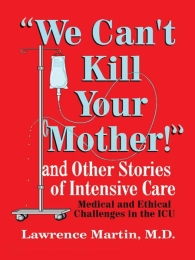
My self-published book, We Can’t Kill Your Mother! And Other Stories of Intensive Care, is a non-fiction account of actual patients in the ICU.  I changed all the names of course, but the stories and medical conditions are real.  My intended audience:  that part of the general public who may be interested in patient stories. 


***

There is a discussion group for physicians, called Sermo, in which physicians can comment on anything that might interest their colleagues.  Recently two physicians posted their self-publishing efforts.  One of them, Dr. Kennedy, is a surgeon who has self-published two books, the second one  just last month.


About his first book, A Brief History of Disease, Science & Medicine (2004), he writes:  “The medical history book began about 15 years ago as a series of lectures for the students on medical history. Eventually I decided to turn it into a book. Yale U Press looked at it and their readers objected that I was not a PhD in history so they passed it up. That book has sold around 20,000 copies so far and sells about 20 to 50 a month on Amazon now. It was adopted as a textbook at several places, including Johns Hopkins and UCLA. Had Yale done it, they would have overpriced it and it would have sold about 1,000.”

He set up his own publishing company (Asklepiad Press) for A Brief History, which also produced his 2nd book, 50 Years in Medicine:  War Stories (2015)


***

Another physician recently self-published a book aimed at practicing doctors, and chose a brilliant title:  How to Be a Rock Star Doctor - the Complete Guide to Taking Back Control of Your Life and Your Profession

 
On the Sermo discussion site Dr. Bernard wrote:  “The book is geared towards newer docs with advice on how to “work-around” some of the gazillion challenges that we face in medicine, especially in primary care.”   She has clearly identified her niche market. 
***

One of the more successful self-publishing efforts by a physician is White Coat Investor, by Dr. James Dahle.  An emergency medicine physician, Dr. Dahle also keeps up an active web site, http://whitecoatinvestor.com/, where he offers lots of useful investing advice.  He set up his own company to self-publish White Coat Investor.
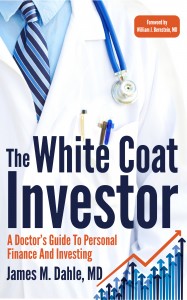


The listing on amazon.com gives an interesting tidbit about his start as a writer. 

  “James M. Dahle, MD, when not out skiing, mountain biking, or rock climbing with his wife and three children, practices emergency medicine in suburban Utah. As a medical resident, he grew tired of being ripped off by unscrupulous financial professionals including mutual fund salesmen, insurance agents, realtors, mortgage lenders, and stock brokers and began educating himself on the ins and outs of personal finance and investing. In 2011, he started The White Coat Investor, now the most widely read, physician-specific personal finance and investing blog in the world, with nearly 200,000 page views per month. His writing helps doctors avoid the mistakes he made and get a “fair shake” on Wall Street.”

***

So if you have become knowledgeable or expert in some area – doesn’t matter what it is – consider writing a non-fiction book.  And then self-publish it.  Here are 3 web sites that tell more of what you need to know, plus the link to a Kindle book aimed at non-fiction self-publishers.

http://www.selfpublishingadvice.org/the-advantages-of-indie-publishing-for-non-fiction/

http://www.thecreativepenn.com/2014/10/14/non-fiction-success/

http://briancartergroup.com/thought-leadership/non-fiction-authors-should-you-self-publish-or-go-traditional/?hvid=47yXr

http://www.amazon.com/Success-Writing-Self-Publishing-Non-Fiction-eBooks-ebook/dp/B007B4X7DA

Saturday, July 11, 2015

SELF-PUBLISHING UPDATE - JULY 11, 2015

It’s been a busy week for my self-publishing efforts.  One novel came out in paperback on Monday, July 6.  Two more novels soon to be published.  A recap.
***
The paperback edition of Out of Time:  An alternative outcome to the Civil War, went up on Amazon this week, via Create Space platform.  OOT has already been out in e-book format, both Kindle and Smashwords. 

Kindle:  http://www.amazon.com/Out-Time-alternative-outcome-Civil/dp/1514161214/lakesidepress
Smashwords:  https://www.smashwords.com/books/view/552121

Now the task is publicity.  I have sent copies to Civil War magazines, which may or (since it’s self-published and is historical fiction) may not review the book   I also sent copies to a few Southern newspapers, in cities where the action takes place (Atlanta, Savannah, Charleston, Richmond).


Professional Services I Used to Publish OOT
Beta-readers (x3)  -- $300 (one Beta-reader did it for free)
Formatting for Kindle and Smashwords -- $100
Uploading files to Kindle and Smashwords -- $0
Library of Congress Copyright registration -- $55
Cover Design -- $150
Create Space for interior design and print on demand -- $350

Professional services NOT used
Line editing
Publicity

I chose not to do professional line editing because the book has been reviewed by several people via beta-reads, plus myself several times.  The few typos that might be picked up did not seem worth the cost of over $2000 for professional editing (the book is 97,000 words).  Also, in the CreateSpace platform, you can make up to 20 text changes for less than $100.  So if people find errors and inform me, I can easily and inexpensively update the book.

As to publicity, money spent advertising a self-published book is almost always a waste.  Better to use your resources to send out copies for review, or social media to publicize your book.  People also pay for "reviews" in some magazines, e.g. Kirkus Reviews charges $425 for this service. 
https://www.kirkusreviews.com/author-services/indie/
A paid review might be worth it IF you get a stellar review that draws attention to your book.  I've not used this or similar service, so can't comment further.

Many web sites discuss how to achieve publicity for self-published books. 
http://writerunboxed.com/2013/06/19/dos-and-donts-for-a-good-self-published-pr-experience/
http://www.selfpublishingadvice.org/category/book-marketing-for-indie-authors/
http://www.bidinotto.com/2013/03/10-winning-marketing-strategies-for-your-self-published-book/

One service I've used in the past was BookDaily's monthly publicity campaign ($49/month). 
http://www.bookdaily.com/authorresource/blog
BookDaily uses blast emails to notify people of your book, but after a year I saw little little value and quit the service.  That's not to say it won't help some authors, though.  The wider the audience for your book, the better the value may be. 

Whatever you do, PAYING BIG BUCKS FOR PUBLICITY COULD BE A RIPOFF.  BE CAREFUL.  For thousands of dollars some publicists will sell you things that will not sell your book (like access to Hollywood producers). 

Spend your money wisely.  Remember, you want to sell your book.  Look carefully into paid publicity before you leap.  Is the expense worth it?  It is tempting to try little things (BookDaily; Kirkus Reviews) and see what happens.  But with rare exception, I have come to realize that the money spent on publicity will likely NOT be recouped in book sales.  So be creative with your time and money when publicizing your book. 

***

Consenting Adults Only is my 2nd novel that will come out this year.  That manuscript has been beta-read 5 times, and I have made all the changes needed from my end.  However, I have sent the manuscript out for professional copyreading.  I chose a copyreader on Fiverr (www.fiverr.com).  The people who offer this service seem very qualified, based on user comments on the fiverr web site.  Also, their prices are reasonable compared to corporate-type offerings. 


 I have also ordered a cover from a free-lance cover designer, who did my previous covers.  The cover above is just a suggestion to my designer; she will come up with something far more intriguing.
 ***

The Wall:  Chronicle of a Scuba Trial is my third novel coming out this year.  I wrote it sometime ago, but never published it. 

I re-did the book this year and ordered a professional cover design (see above).  I also ordered a couple of drawings for the book, using free-lance artists found on fiverr; they are very reasonable and offer quick turn around.  The Wall manuscript is also out for copyreading.  I plan to publish it only in e-book format, since it’s really a niche book that will probably only interest scuba divers and (some) trial lawyers. 

***


.


Thursday, July 2, 2015

ALLI


In my blog post of June 30, which discussed other self-publishing blogs, I did not include a biggie from the UK, known as ALLI, Alliance of Independent Authors.  It is actually a world-wide non-profit organization, which publishes a daily blog at:

http://allianceindependentauthors.org/

I get it daily and skim it, taking away some useful tidbits here and there.  The blog post today is a winner, one that all self-publishers should read. 

http://www.selfpublishingadvice.org/all-the-ways-to-self-publish-a-book-on-amazon/

It covers all the Amazon publishing platforms, giving pros and cons on each.  Also covers Amazon's promotion tools. Here is the list of items discussed.

PLATFORMS
  • Audiobook Creation Exchange (ACX) for Audiobooks
  • Createspace (CS) for Print
  • Kindle Direct Publishing (KDP) for publishing and selling ebooks
  • The specialist Kindle programs (limited access):
    • Kindle Scout
    • Kindle Singles
    • Kindle Owners Lending Library (KOLL)
    • Kindle Unlimited (KU)
    • Kindle Worlds (KW)
PROMOTION TOOLS
  • KDP Select
  • Amazon Advertising
  • Amazon Giveaways


Tuesday, June 30, 2015


Self-Publishing Blogs

I started this self-publishing blog without much forethought.  The idea just came to me one day recently, while in the midst of preparing 3 novels for publication (two were written in previous years).  At the same time I had been emailing with a few other writers, offering advice on self-publishing. 

I enjoyed sharing what I learned with these few people.  When I looked at other self-publishers’ blogs I thought, hey, I can do that – share what I am learning with a wider world.  So I started Larry’s Self-publishing Blog, to chart my progress getting these three novels published and, along the way, offer useful advice to other self-publishers. 

To be sure there are a lot of self-publishing blogs out there, some good and some not so good.  When you google “self-publishing blog” you’ll find at the top of the list “52 Great Blogs for Self-Publishers.”  However, that list dates from November 2010 and includes several defunct web sites.  Among the living, several “blogs” are nothing more than glorified ads, or offer generic claptrap.  However, there are a few good self-publishing blogs that I reviewed and can recommend.  (I’m sure there are many others as well; I just haven’t reviewed them). 

 
Joanna Penn
The Creative Penn


Ms. Penn’s blog offers lots of useful information, including “How to publish a book 101.” http://www.thecreativepenn.com/2013/01/15/how-to-publish-a-book-101/

In “101” she doesn’t mess around, and gives a clear warning up front:

I also get emails from people who have paid $20,000+, have been utterly ripped off and are devastated with the results. This happened to me once, although with a lesser financial impact, and I am passionate about making sure authors don’t fall into these traps.
With big name publishers like Penguin/Random House and Simon & Schuster signing up with Author Solutions to further exploit this kind of vanity publishing, you guys need to know there is a better and cheaper way.

 
Self Publishing With Amazon, Kindle,
CreateSpace, and Lightning Source

by Aaron Shepard


Shepard has his finger on the pulse of these publishing companies, which together attract a substantial share of self-published authors.  He offers a fair amount of detail about how they operate. His focus is on distribution, not print quality, and writes:

The proper question, then, is which company you should choose on the basis of distribution. And for some time, there has been no real contest. Amazon is where self publishers can sell the most books, and Amazon discriminates against books from Lightning—though at this point, I think it’s mostly due to system glitches that Amazon doesn’t care enough to fix.

So, almost any new publisher should start with CreateSpace. See how many books you sell. Then, if selling an additional 10% to 25% would be worth the effort—because that’s likely all you can expect—add Lightning Source—or rather, IngramSpark, its gateway for self publishers. Aside from the hassle of dealing with Lightning’s technical requirements, there’s no reason you can’t use both companies. (But see my blog post on ISBN requirements and my article on CreateSpace’s Expanded Distribution Channel.)


Regarding Shepard's assessment, I should clarify that there two companies controlling these self-publishers. 

Amazon – owns:
            Kindle for self-published e-books
            Kindle Scout, which is Amazon’s royalty-publishing arm (they pay the author!)
            CreateSpace, which is Amazon’s division to assist authors in self-publishing, both in
                        paperback and on Kindle

Ingram – owns:
          Ingram Spark – for the small self-publisher
              Lightning Source – for the larger self-publisher

 There is often some confusion about the difference between these two Ingram companies.  Part of the confusion is Ingram’s fault, because both serve the self-publisher and there is no rational basis (that I can see) for having two overlapping divisions. Furthermore, when you sign up for one division on their web site, all the information you have to give them (and it’s a lot) does not transfer over to the other division, though it’s the same company and both divisions are geared toward the self-publisher.  Another blogger, Joel Friedlander (see his blog below), offers this distinction between the two divisions (from a 2013 posting; http://www.thebookdesigner.com/2013/11/news-update-should-you-use-lightning-source-or-ingram-spark/)

  • If you are a do-it-yourself author without experience in book publishing and you are unsure whether it’s something you intend to do for long, consider Ingram Spark for print on demand and wide distribution.
  • If you are hiring professionals, have a real plan for publishing and marketing books to a definable audience, and plan to grow your business, consider Lightning Source as an invaluable strategic partner in your growing business


Writer Beware


This blog lists three different authors:  Victoria Strauss, Michael Capobianco and Ann Crispin.  They point out scams bad deals that can hit any self-publisher.  She discusses the lawsuits against Author Solutions that I mentioned in an earlier blog. 

Two other very interesting posts deal with writing contests, how they are often nothing more than marketing ploys and don’t benefit the writer.  Read these before you enter any (more) writing contests (both accessed from above URL).

June 9, 2015
Awards Profiteers: How Writers Can Recognize and Avoid Them

June 24, 2015
Almond Press Short Story Competition:  Writing for “Exposure”


The Book Designer

Practical advice to help build better books

by Joel Friedlander


 Friedlander has been blogging for years, and along the way has offered lots of useful advice.  (His web site has an alphabetical list of past topics.)  He also offers, for free, an excellent pamphlet 10 Things You Need to Know About Self-Publishing. 


 Included in his list is a warning about subsidy publishers (which I have discussed earlier).  He writes:

Subsidy publishers make money from selling services to authors, not from selling books to book buyers.

 Given Friedlander’s intimate knowledge of writers’ blogs, I found the following comment interesting: 

But today anyone traveling the blogosphere will see that the writers of these [writers’] blogs have not made the leap to become published book authors. Maybe it’s a case of different skill sets. Writing a 500-word blog post takes a different kind of writing skill than trying to create a 200-page book from the wilds of your article archives.    (The Book Designer, June 29, 2015)


*  *  *

So some blogs are good, some not so good.  Some bloggers are book writers, but most, apparently, are not.  My plan is to blog and write books.  And while my blog is based on what I have learned and continue to learn from my own self-publishing efforts, each entry will attempt to offer something useful to the newbie in self-publishing. 


Monday, June 29, 2015


Beta-Readers
One of the three novels I am self-publishing this year is Consenting Adults Only (CAO).  CAO at this point comes to 76,000 words, a respectable size for a novel.  I have completed a draft of CAO a dozen times, but since the first ‘completion’ I always seem to find something more that needs changing or improving. This is in part due to beta-readers of the work.

Before I turned to fiction, I didn’t even know what a beta-reader is.  Now I know.  A beta reader is someone who reads your work for style, story flow, and anything else that catches their fancy.  A beta reader is NOT an editor or copyreader.  Editors and copyreaders are generally professionals who are paid by the word. A beta reader can be anyone who enjoys reading – a friend, relative, or total unknown you found on the internet - and they may charge nothing (if family or friends) or a nominal amount, e.g., $100-$200, rarely more. 

Click on Wikipedia for concise definition:
https://en.wikipedia.org/wiki/Beta_reader

There are many beta-readers out there willing to read your manuscript and make comments to improve it.  I have found beta-readers among friends and relatives, and also through the web site Goodreads, which has a beta-reading discussion group.
https://www.goodreads.com/group/show/50920-beta-reader-group

 If you google “beta-readers” you will find numerous web sites offering this service.  This is a nice web site titled “What makes a good beta reader?”
http://www.smallbluedog.com/what-makes-a-good-beta-reader.html

One piece of good advice is to choose someone who is interested in your story or subject.  Don’t choose a “Young Adult genre” beta-reader for a story dealing with explicit sex and mayhem.  For my novel Out of Time:  An alternative outcome to the Civil War, one of my beta readers presented himself as an amateur historian, and he was most helpful in his remarks about the story’s Civil War history.  So some vetting of your chosen beta-reader for their interests is a good idea. 

Understand there is NO standard for beta-reading, and the beta-reader may even ask, “What do you want me to look for?”  If they find typos or grammatical errors that’s a plus, but again, they are not editors and editing is not their task.

I have had three beta-readers for Consenting Adults Only (CAO), and each has been extremely helpful.  When you engage a beta-reader, always keep in mind that they only make suggestions; the novel is still yours and you should not make a change that doesn’t seem right to you.  I agreed with about 75% of my beta-readers’ suggestions and made suitable revisions, in some cases minor and in others substantial.  The other quarter of suggestions I more or less ignored or disagreed with.

The first beta-reader for CAO was my wife, a psychiatrist.  She made several suggestions about the two main characters, who have some significant psychological problems.  I needed to better explain why they act way they do.  I agreed, and so added some scenes and descriptive text based on her insights.  (No surprise:  I dedicate the novel to her.)

My next beta reader was an Emergency Department (ED) nurse whom I found on Goodreads (see link above).  My novel’s protagonist is an ED doctor, so this was a perfect fit.  She found a host of concerns, including some things I wrote that don’t ring true in the ED.  This led to more revisions.    

Then I sought out a beta-read from a friend who is both a retired attorney and a successful author.  CAO also has medico-legal sections in it, so her comments in this regard were very helpful.  In addition she found numerous typos that I (and others) had missed, and a couple of glaring factual errors.  Wow!  How did I (and previous beta-readers) miss those?  But we did.   That’s why you need a good copy editor.  (Repeat with me:  A beta-reader is not a copy editor.)

The most emphatic recommendation of this last beta reader (using her hat as a writer) was to get rid of the prologue.  Prologues in fiction are iffy, and there is quite a bit of back and forth in writing circles on if/when to use them.  Some readers simply ignore them.  Others find them distracting and just want to get on with Chapter 1. See the following web sites, which are short and to the point about prologues.

http://www.writersdigest.com/editor-blogs/questions-and-quandaries/formatting/when-to-use-a-prologue

http://www.writing-world.com/fiction/prologue.shtml

I loved my prologue, and she admitted it was well-written, but just not appropriate for the novel.  I am also reminded of Stephen King’s admonition to “kill your darlings” if they don’t advance the story (see his memoir On Writing).  She said my prologue didn’t.  In the end, I (reluctantly) had to agree with her.  It was all backstory, about the protagonist as a youth.  She was adamant the book should begin with Chapter 1, not with a 10-page backstory, no matter how good the writing.  So I axed the prologue and dispersed the backstory throughout the novel.  I lost my “darling” but have a much better novel as result. 

A lot of self-published authors won’t spend the $1000+ to hire a professional editor.  But no book should be published without being first reviewed by one or more beta readers.  Beta-reading is much less expensive, and while not a substitute for professional editing, can be invaluable to your book’s success.

Friday, June 26, 2015


Copyright Issues

One potential landmine self-published authors can hit is copyright infringement.  This is unlikely to be a problem with royalty-published authors because the publisher will catch the problem and make sure it doesn’t get published.  This situation highlights one major difference between self-published and royalty-published works.

Royalty-published books – go through multiple reviews and edits to catch mistakes (and copyright issues)  

Self-published books – not so much; reviews and edits usually severely strained by author’s budget

So as self-published authors we have to make sure there are no copyright infringements.  This all came to light in my almost-finished novel Consenting Adults Only.  The protagonist, a young physician in Las Vegas, plays guitar in local jam sessions.  In one scene he takes his girlfriend to a jam session at Gilligan’s, a coffee house.  The jam leader announces the first song will be The City of New Orleans, and tells the assembled audience some background about the song:

      “There’s a little story,” he said.  “Goodman found Arlo Guthrie in a bar alone one night, and asked him to listen to the song.  Arlo reluctantly agreed, on the condition that Goodman buy him a beer; he would listen to the song as long as it took to drink his beer.  Well, Arlo liked the song and next thing you know, he recorded it.  Became a smash hit in the early 70s.  Let’s play.”

 Then I quote the first two stanzas of The City of New Orleans, which the audience sings while the musicians play the music.
 I did this for several other songs as well, including This Land is Your Land, You Are My Sunshine and When the Saints Go Marching In.
 
All old songs, no problem, right?
 
Well, Yes, there is a problem.  As I learned through some belated research, they are all currently copyrighted!  The lyrics were all written after 1922, which is the cutoff for existing copyright on song lyrics.

 
All works published in the United States before 1923 are in the public domain. Works published after 1922, but before 1978 are protected for 95 years from the date of publication. If the work was created, but not published, before 1978, the copyright lasts for the life of the author plus 70 years.  http://www.pdinfo.com/copyright-law/copyright-and-public-domain.php
 
(See also:  http://fairuse.stanford.edu/overview/faqs/copyright-basics/)

I really liked the lyrics I chose, as they played into the interaction with the doctor and his girlfriend during the jam session.  So I (naively, it turns out) looked up the copyright holders on the internet and e-mailed them for permission.  I got only a single response, from Sony/ATV, which holds the copyright to Saints (lyrics I wanted to quote date from 1937).  I was asked to fill out a form requesting permission, but the form asked for information impossible to state at this point:  name of publisher, name of editor, print run, release date of work, and price of work. 

So I did the obvious -- changed all the songs to those written before 1922 (actually, before 1900).  Although I liked my first choices, they were expendable.  My new (old) songs include Simple Gifts, Down in the Valley and Buffalo Gals (Won’t You Come Out Tonight).  They are listed as “traditional” in folk music, and have no copyright. 

So be wary of song lyrics.  And in other copyright areas as well, such as quoting from books and magazines.  Do your research and make sure you are not infringing on someone else’s work. 

(This blog will resume on Monday, June 29)


Thursday, June 25, 2015


In my previous blog entry (June 24, 2015) I gave some background to my self-publishing history, including the two books below.


Suffice to say today it’s a whole new world compared with the 1990s and early 2000’s.  There are now millions of self-published books, and a large industry has grown up to serve the world’s wanna be writers.   Whereas I didn’t have much choice when I picked Author House in 2001 for “We Can’t Kill…”, now we have a huge menu of options for self-publishing (see first few blog posts). 

And there’s the rub, I think.  The indie author is a sitting duck for “publishers” wanting to produce your book.  But mostly they want to sell you services, NOT sell your book.  Not that we don’t need these services; in most cases we do (especially editing).  It’s just that too often the pitches are for over-priced services, including some you don’t want or need.    

I recently considered using “assisted publisher” Archway for my new novel, Consenting Adults Only.  http://www.archwaypublishing.com

Archway interested me because it’s a unit of Simon & Schuster, and they offer one-stop shopping like other assisted-publishers.  Like the others, they will take your manuscript and cover, turn it into a print book and e-book, and sell you copies at a ‘discount’.  Their base price for these services, without editing or any marketing is $2,000.  (Add in professional editing and marketing and the price can zoom to well over 10K; check out their web site).  I figured the base price was at least double what it would be if I went a al carte, say, with Create Space. 

But it wasn’t just the cost that deterred me.  I looked at the “Archway” contract and was surprised to see that the only place on the contract with the words “Simon & Schuster” was the heading on the first page.    Turns out it is really a contract with Author Solutions, an Indiana firm which is the publishing arm for many self-publishing fronts, including Author House, Xlibris, iUniverse, BookTango, and Archway (see complete list in link below).  And the terms weren’t good. 

One item in particular was disturbing.  They set the list price of the paperback, even when it's print on demand.  (The author gets to set the price of the e-book.)  The Archway sales person I talked to on the phone said this was necessary to make sure the company makes a profit on each paperback.  To see how crazy this is, check out Archway's "Motive to Kill" on Amazon; this is a 288-page ordinary paperback with a price of $18.99!  Not many people are going to buy an unknown, self-published author's paperback for $18.99.  (And the hardcover?  35.95!)

The basic problem is that the business model of AS-affiliated publishers is not to sell books to readers, but to sell books and services to its authors.  I still get calls every month or so from Author House to “buy more books,” “buy publicity campaign,” buy this and that.  Invariably the caller knows only the title of my book and nothing else; he or she is clueless about what’s inside.    

So I’ve come to learn that publishers who work under the rubric of Author Solutions are mainly marketing firms, with the customer base not the readers but the authors.  This situation is well known to a lot of folks, but not to everyone, so beware.  In my research I found there are two class action suits against AS.  The following two blog posts do not paint a pretty picture.


Quite frankly, my experience with Author House 14 years ago was not bad (this was before they hooked up with AS).  The only real issue I've had since then has been the marketing calls, but the callers are polite and I have no trouble declining their offers, so it's no big deal.  

In truth, if you don’t much care about author autonomy or paperback sales, don’t want to mess with web sites like Create Space's or with hiring free-lancers, and have the money, then there is nothing wrong signing up with an AS-affiliated company.  It is one-stop and you will get your book published.  But note the caveats:  You don't much care about author autonomy or paperback sales, etc. 

The loss of control when signing with an AS-affiliated company and the extra expense, plus all the negative comments from unhappy authors, have dissuaded me from that type of relationship.  Fortunately, today the options are much better for writers than a decade ago. 

So I’ve gone from ordering books from a printer (early 1990s) to publishing with an assisted-publisher (Author House, 2001) to now doing most publishing tasks a al carte, using CreateSpace as the publishing platform.  I am constantly exploring other platforms, and looking for new ideas on how to produce a book – as long as I feel they are in the author’s best interest.

My basic message is to stay flexible and in control of your book.  Investigate all your options.  Don’t sign a contract unless you understand and feel comfortable with the terms.  No one will care as much about your book as you do.